Mukalla / University Media
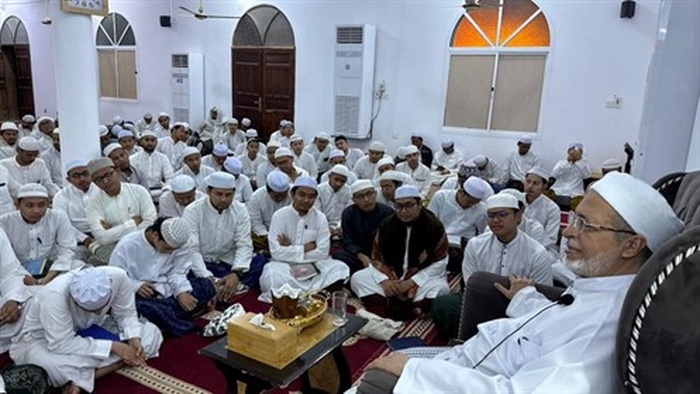
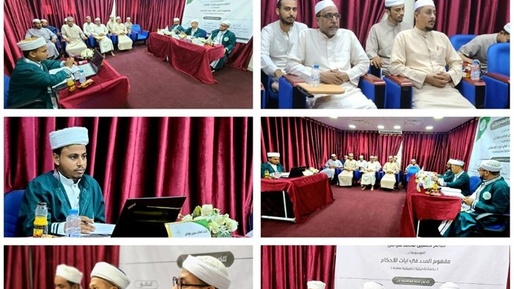
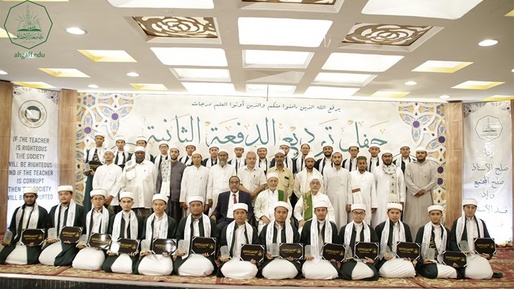
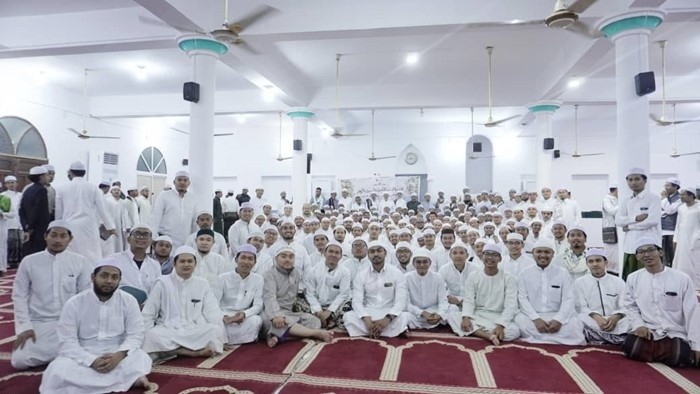
The University concluded the activities of the Qualifying Scientific Course, which was held over five days and delivered by the University President, Professor Abdullah Mohammed Baharoon, with the participation of students from the advanced levels of the Sharia-related faculties.
The course brought together fourth-level students from the Faculty of Islamic Sciences and fifth-level students from the Faculty of Sharia and Law, as part of a qualifying academic program aimed at enhancing students’ Sharia and intellectual awareness and connecting academic knowledge with contemporary issues and real-world challenges.
The course addressed a number of important academic and intellectual topics, including the position of students of Islamic knowledge on political affairs, building the Islamic family, ways in which students of Islamic knowledge can benefit from the Internet and artificial intelligence while avoiding their potential harms, as well as reforming religious education in the context of the modern university and traditional school. These topics were addressed within a framework focusing on issues relevant to the academic, intellectual, and social lives of students of Islamic knowledge.
At the conclusion of the course, Professor Abdullah Mohammed Baharoon emphasized the importance of such qualifying programs in developing a well-balanced personality among students of Islamic knowledge, academically, intellectually, and psychologically. He stressed the need for students to put the knowledge and guidance gained from the course into practice throughout their academic and professional journeys.
The participants also expressed their appreciation for the course, commending the academic quality of the lectures and the insights and guidance they provided, which contribute to enhancing their academic performance and strengthening their role in serving the community.
The course is part of a series of academic programs that the University is committed to implementing with the aim of advancing the quality of religious education outcomes and preparing qualified academic professionals capable of making a positive contribution to the development of society.